Raised Bed Gardening for Seniors & Wheelchair Users: The Complete Height Guide
If you’re gardening with arthritis, limited mobility, or using a wheelchair, you’ve probably already heard that raised beds are the answer. And they are — but only if they’re the right height.
Get it wrong, and you’re still straining, reaching, and hurting. Get it right, and gardening becomes genuinely comfortable again.
I’ve spent years figuring this out the hard way. In this guide, I’m sharing the exact heights that work — depending on whether you’re standing, seated, or using a wheelchair — so you can set up your raised beds once and get it right.
Why Raised Bed Height Matters So Much
Most standard garden beds sit 6–12 inches off the ground — which means you’re still bending almost all the way down to reach them. For anyone with back pain, knee problems, hip replacements, or arthritis, that’s not much better than gardening at ground level.
The goal of a truly accessible raised bed is to bring the plants up to you, not the other way around. When your bed is at the right height:
• You can work comfortably from a standing or seated position
• There’s no need to bend, kneel, or twist
• Your hands, wrists, and back take far less strain
• You can garden for longer without flaring up
The right height depends on how you garden — and that’s where most guides fall short.
The Right Raised Bed Height: A Quick Reference Guide
Your Situation
Standing, no bending problems 12-18 inch
Standing with back or knee pain. 24-30 inch
Seated on a garden stool or chair 24-28 inc
Wheelchair User 24-28 inches
Table top/you shaped bed (seated access)
These aren’t rigid rules — they’re starting points. Your ideal height also depends on your arm length and the width of the bed (more on that below).
Raised Bed Heights Explained
If You’re Standing But Have Joint Pain
A height of 24–30 inches is the sweet spot for most people who garden standing up but struggle with bending. At this height, you can reach into the bed comfortably without leaning over too far.
This is the height I work with most days. On bad pain days, even a few inches of difference makes a real impact on how my hands and back feel afterwards.
Tip: The wider your bed, the more you’ll need to lean in. Keep beds no wider than 60–70 cm (about 24 inches) from one side, or 120 cm (48 inches) if you can access from both sides. This raised bed on wheels is my favourite option and I have one of these in my garden.
If You’re Gardening from a Chair or Garden Stool
A rolling garden stool is one of the best investments I ever made. If you garden this way, aim for a bed height of 24–28 inches — enough that you’re not hunching down, but not so high you lose reach. Pair this with a stool that lets you adjust your height, and you can find the perfect working position for your body on any given day.
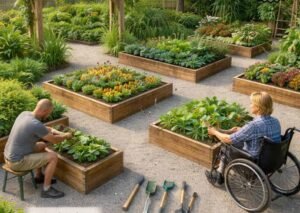
If You Use a Wheelchair
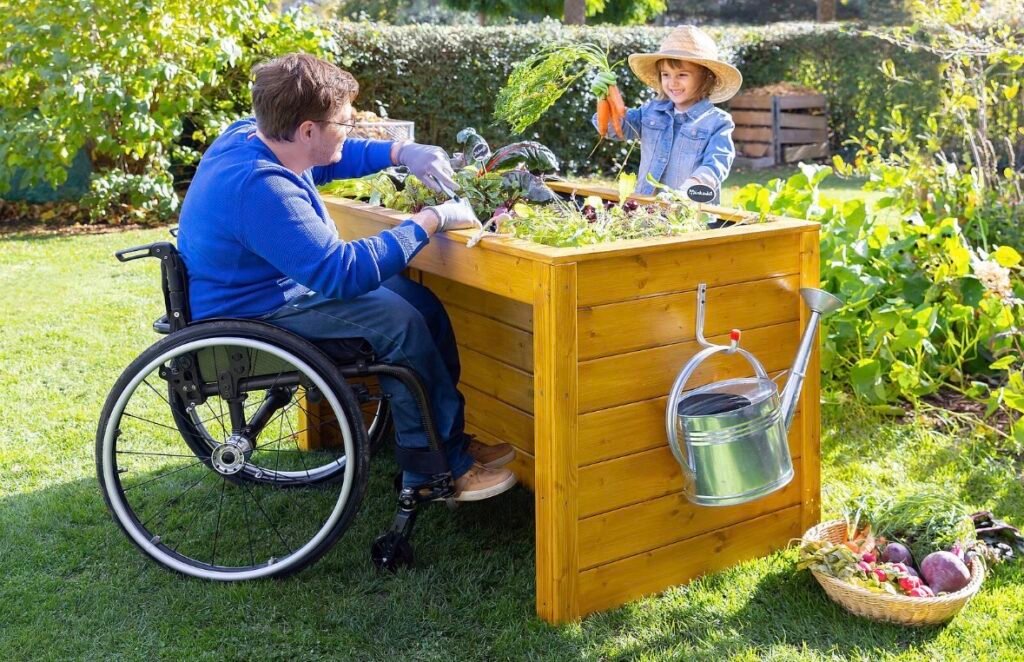
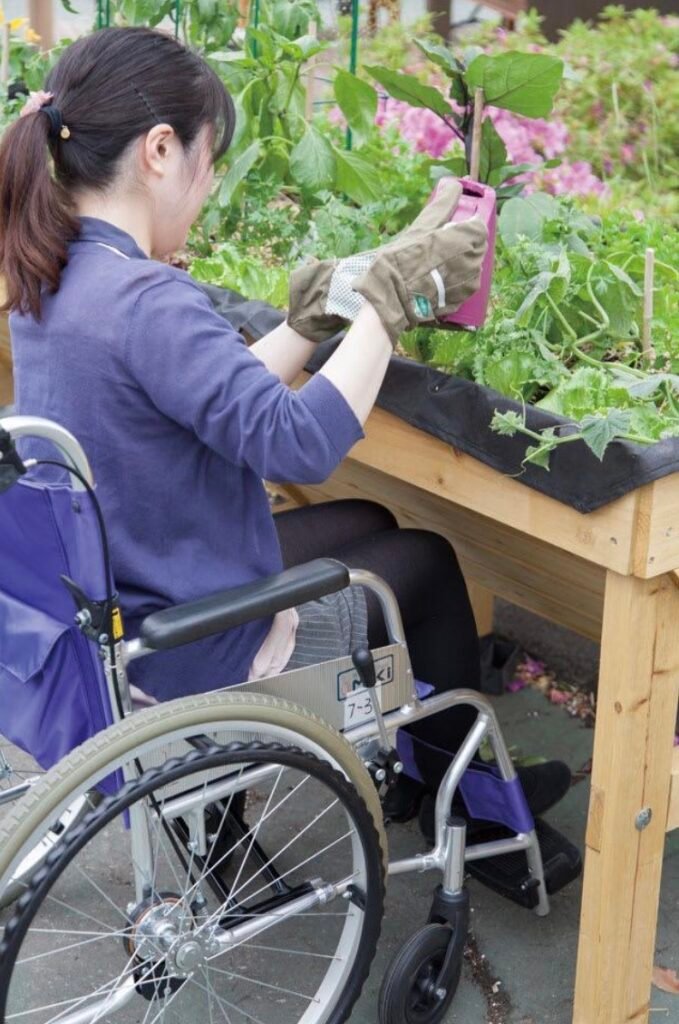
This is where most raised bed guides go wrong. They give a single number without accounting for the most important factor: knee clearance underneath the bed.
For wheelchair users, the bed needs to be:
• 24–28 inches tall — comfortable reach height for most wheelchair users
• At least 7 inches of clearance underneath — so the chair can roll up close to the bed
• No wider than 24 inches from one side — to avoid overreaching
Without that clearance underneath, you’ll have to reach over the edge from a distance, which puts strain on your shoulders and back. With it, you can pull right up to the bed and garden comfortably from directly in front of your plants.
Some raised beds are specifically designed with this in mind — they have legs or a frame that creates an open space underneath. These are often called tabletop garden beds or leg-raised garden beds, and they’re worth looking at if wheelchair access is a priority.
The U-Shaped Bed: My Favourite for Full Accessibility
If you have the space, a U-shaped raised bed is one of the most accessible garden setups you can create — for wheelchair users and standing gardeners alike. The U-shape means you can access plants from three sides without moving, so there’s always a plant within comfortable reach. Build it at 28–34 inches tall, and you have a setup that works whether you’re standing, sitting, or in a wheelchair. I’d recommend keeping the interior width of the U at no more than 60 cm so you can reach the back without straining.
What About Width? (Just As Important As Height)
Height bc gets all the attention, but the width of your raised bed is just as important for pain-free gardening.
The rule is simple: you should never have to stretch or reach to get to the middle of your bed.
• Single-sided access: Keep width to 60 cm (24 inches) maximum
• Double-sided access: Up to 120 cm (48 inches) is fine
• Wheelchair users: Stick to 60 cm or less from one side
A bed that’s too wide forces you to lean and twist — exactly the movements that cause flare-ups.
Choosing the Right Material for Your Raised Bed
Once you’ve decided on your height, you need a bed that will actually hold up at that height. Here are your main options:
Cedar wood is the classic choice. It’s naturally rot-resistant, looks beautiful, and insulates soil well. It will eventually need replacing, but a good cedar bed can last 10–15 years.
Galvanised steel or aluminium beds are increasingly popular for taller heights because the material is strong enough to hold its shape without needing thick, heavy walls. They’re also lightweight to assemble.
Composite or recycled plastic boards won’t rot or warp, making them very low maintenance. They’re a great choice if you want a tall bed that you don’t want to think about for 20+ years.
Ready-made raised bed kits are worth considering if building from scratch feels daunting. Many come pre-cut with all the fixings included, and some are specifically designed for accessibility. I’ve put together a list of some of my favourites in my Amazon shop if you’d like a starting point
Setting Up Your Raised Bed for Maximum Accessibility
Getting the height right is step one. Here’s what else makes a real difference:
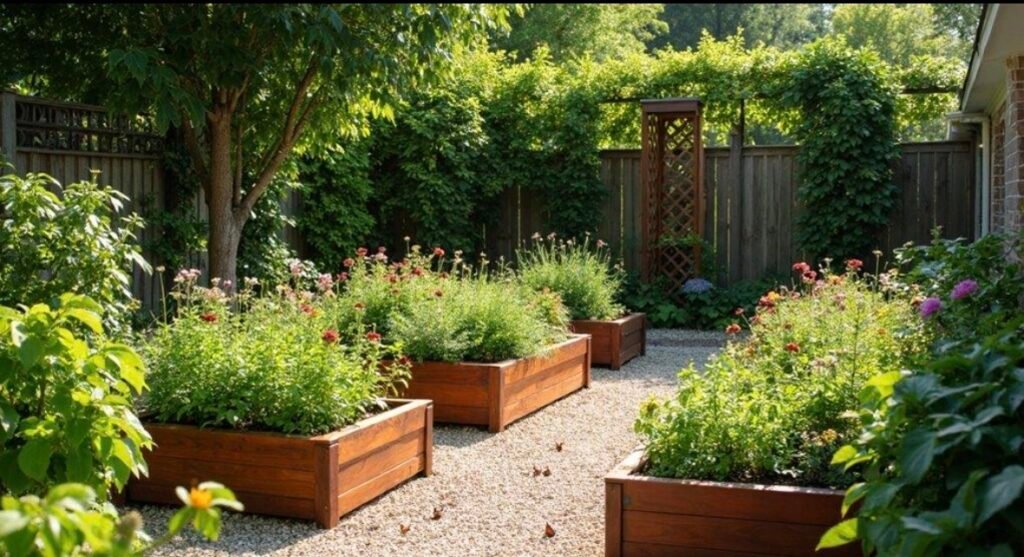
Wide, flat pathways. Leave at least 90 cm (36 inches) between beds — and ideally more if you use a wheelchair or walking frame. A firm, level surface (paving slabs, compacted gravel, or decking) is much safer than grass or loose soil.
Seating nearby. A simple bench or garden chair placed close to your beds means you can take breaks without trekking back to the house. This makes it much easier to pace yourself on difficult days.
Drip irrigation or soaker hoses. Watering is one of the most tiring parts of gardening. Installing a simple drip system removes it almost entirely. I have more detail on this in my irrigation guide here.
Tools within reach. A small hook or hanging caddy attached to the side of your raised bed keeps your most-used tools right where you need them — no bending down to pick them up from the ground.
Mulch generously. A thick layer of mulch means less weeding, less watering, and less work overall. It’s one of the simplest ways to reduce the maintenance burden of any garden.
Best Plants for Accessible Raised Beds
Not all plants are equally suited to raised bed gardening at height. Here are some that work especially well:
• Herbs — basil, parsley, chives, and mint are compact, useful, and easy to harvest from a standing or seated position
• Salad greens — lettuce, rocket, and spinach grow quickly and can be harvested a little at a time
• Cherry tomatoes — with a small cage or support, these are productive and manageable in a raised bed
• Dwarf beans — bush varieties don’t need staking and produce well in a contained space
• Strawberries — perfect for raised beds and genuinely rewarding to harvest at a comfortable height
• Pansies and marigolds — for colour and to attract pollinators, with minimal effort required
For a deeper look at choosing plants that work for pain and mobility, have a read of my low maintenance plants guide here.
A Note on Getting Started
If you’re new to raised bed gardening, don’t try to build or buy everything at once. Start with one bed at the right height for your situation, and see how it changes the way you garden.
I can tell you from experience — the difference is significant. There’s something genuinely freeing about being able to tend to plants without bracing yourself for the pain that usually follows.
Your garden doesn’t have to shrink as your body changes. It just has to adapt.
Quick Summary: Raised Bed Heights at a Glance
• Standing with joint pain: 24–30 inches
• Seated on a stool: 24–28 inches
• Wheelchair user: 24–28 inches + clearance underneath
• U-shaped or tabletop bed: 28–34 inches
• Maximum width: 24 inches from one side, 48 inches from both sides
Have you set up a raised bed that’s made a real difference to your gardening? I’d love to hear about it — drop a comment below or come and share it with us on Facebook or Instagram.
And if you found this helpful, you might also enjoy:
• How to Build a Fully Accessible Raised Bed Garden
• 10 Best Gardening Tools for Arthritis
• Accessible Gardening Made Easy