
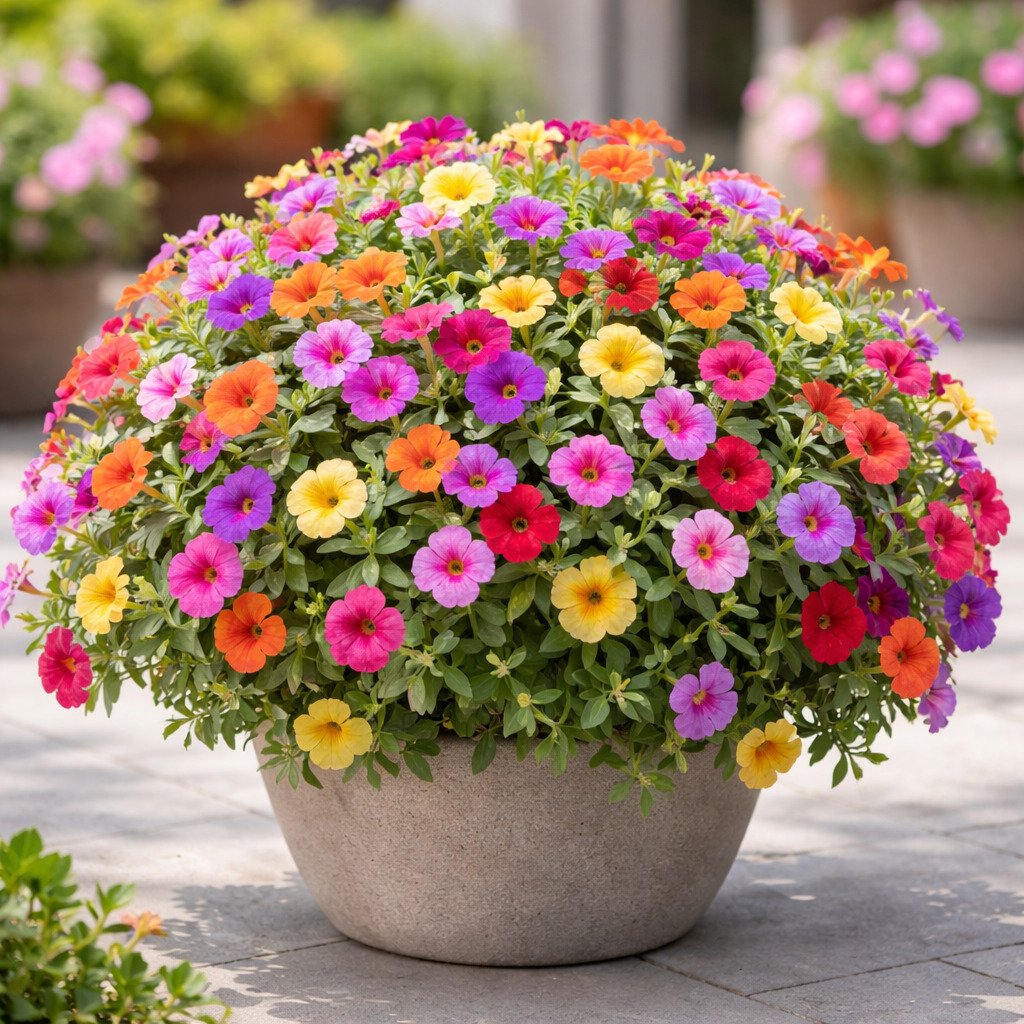
If you love hanging baskets overflowing with flowers, Calibrachoa — often called million bells or “mini petunias” — will be your new favourite plant. Known for their nonstop blooms and trailing habit, these little powerhouses add instant colour and charm to any garden, patio, or balcony.
In this complete care guide, I’ll walk you through everything from planting to pruning, so you don’t need to read any other article to grow thriving, show-stopping calibrachoas.
⸻
What is Calibrachoa?
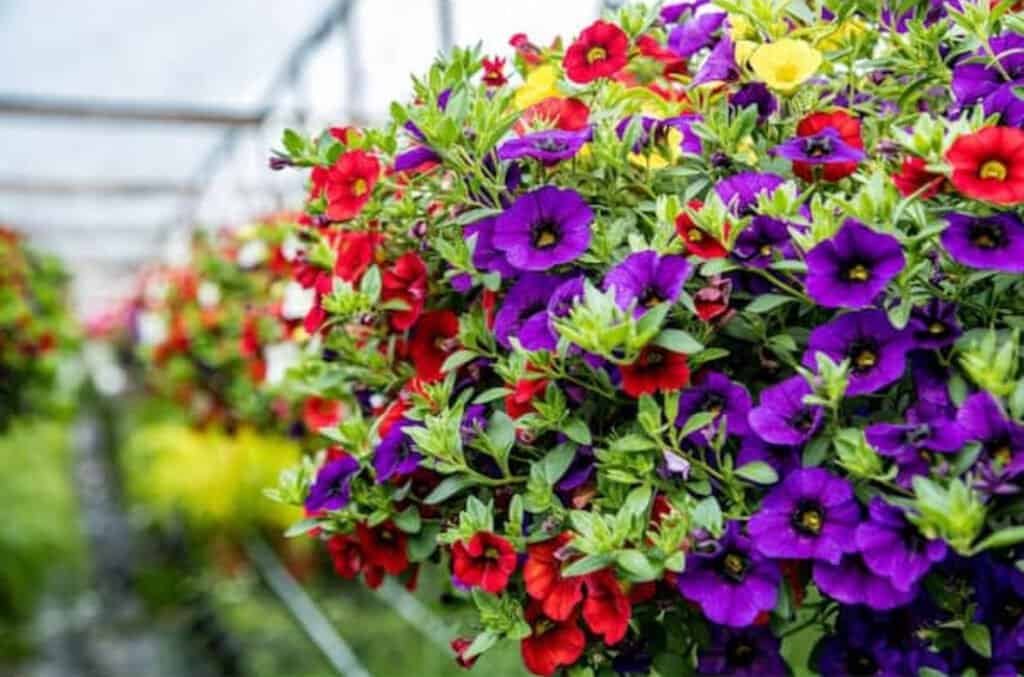
Calibrachoa is a compact, trailing plant related to petunias but with smaller trumpet-shaped blooms. They come in an incredible range of colours — solids, bi-colours, stripes, and patterns — and bloom continuously from late spring right through to the first frost.
They’re most often grown as annuals, but in warm climates (USDA Zones 9–11) they can be treated as short-lived perennials.
Quick Facts
Botanical name: Calibrachoa hybrids
Common names: Million bells, mini petunia, Superbells® (brand), Kabloom™ (brand)
• Size: 6–12 in tall, trailing 12–24 in wide
• Light: Full sun (6–8+ hours daily)
• Soil: Rich, well-drained, slightly acidic (pH 5.0–6.5)
• Hardiness: Perennial in Zones 9–11; annual elsewhere
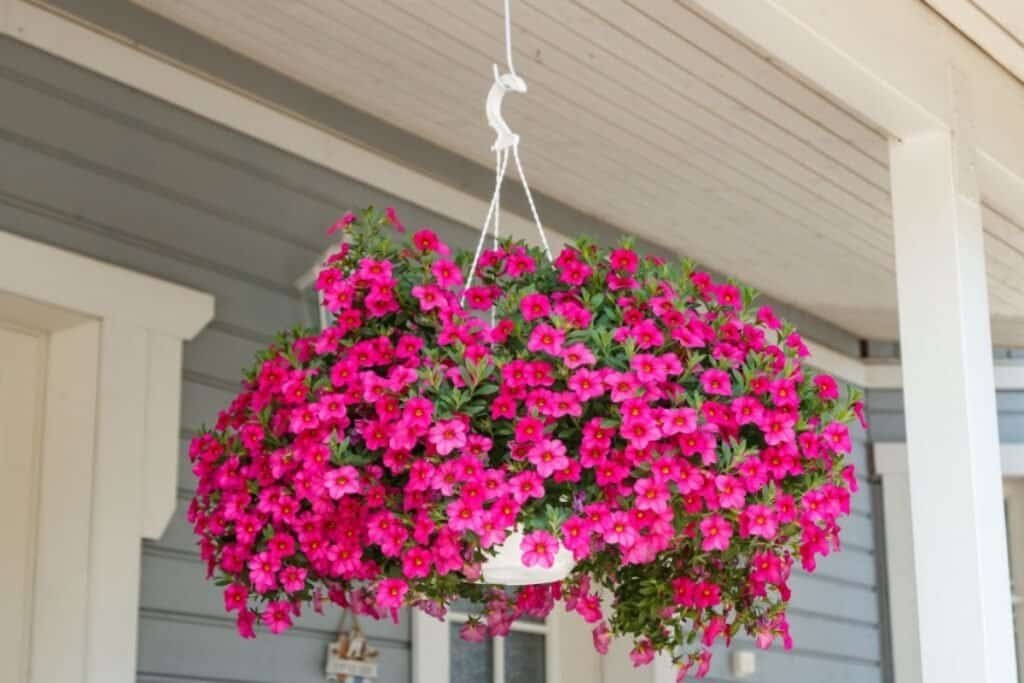
• Best use: Hanging baskets, window boxes, container “spillers”
Why You’ll Love Growing Calibrachoa
• Nonstop colour: Blooms from late spring to frost without deadheading.
• Perfect for containers: They thrive in pots, hanging baskets, and window boxes.
• Compact yet full: Low-growing and mounding with long trailing stems.
• Low maintenance: Just keep them fed, watered, and trimmed occasionally.
Choosing the Right Spot
Light:
Calibrachoa need full sun — aim for at least 6 hours of direct sunlight per day. In extremely hot climates, a little afternoon shade can prevent heat stress.
Temperature:
They prefer mild weather (55–70°F / 13–21°C) but will bloom through summer if kept well watered and fed.
Soil:
These plants dislike heavy, soggy soil. Use a quality potting mix for containers and amend garden beds with compost and perlite for drainage. Keep the pH slightly acidic (5.0–6.5) to prevent nutrient deficiencies.
Planting Calibrachoa Step-by-Step
1. Choose your container: Select a pot or basket with excellent drainage holes.
2. Prepare the mix: Use a premium potting mix + perlite or pumice for extra drainage.
3. Add fertiliser: Mix in a slow-release fertiliser before planting.
4. Plant after frost: Wait until all danger of frost has passed and soil temperatures are above 50°F (10°C).
5. Spacing: Space plants 10–12 in apart in beds, or 1–3 plants per hanging basket depending on size.
Watering Tips
Calibrachoa like consistent moisture but won’t tolerate waterlogged soil.
• Water deeply until it drains out the bottom.
• Let the top inch of soil dry before watering again.
• In hot weather, hanging baskets may need water once or twice daily.
Feeding for Maximum Blooms
These plants are hungry!
• At planting: Add slow-release fertiliser to your mix.
• During the season: Feed every 1–2 weeks with a water-soluble fertiliser formulated for blooming plants.
• Watch for yellowing leaves — often a sign of iron deficiency caused by high soil pH.
Pruning and Maintenance
• No deadheading required — modern varieties are “self-cleaning.”
• To refresh tired, leggy plants in midsummer, trim back stems by ⅓–½.
• Pinch tips early in the season to encourage a fuller, bushier plant.
⸻
Propagating Calibrachoa
Most varieties are hybrids and won’t grow true from seed. Instead, propagate by cuttings:
1. Take 2–3 in soft tip cuttings.
2. Remove lower leaves and dip in rooting hormone (optional).
3. Place in a moist, free-draining mix under bright light.
4. Roots form in 2–4 weeks.
Common Problems and How to Fix Them
Problem
Cause
Solution
Yellow leaves
High pH / iron deficiency
Lower soil pH, apply chelated iron
Few flowers
Low light or low nutrients
Move to full sun, increase feeding
Leggy growth
Lack of pruning
Trim back by one-third
Root rot
Poor drainage
Improve mix, avoid overwatering
Aphids, mites, thrips
Pests
Treat early with insecticidal soap or neem oil
Overwintering
• Zones 9–11: Can be kept outdoors year-round.
• Colder zones: Take cuttings in late summer to grow indoors, or move containers inside to a bright, cool spot. Most gardeners replant each year.
Best Varieties to Try
• Superbells® Series – Proven Winners’ top-performing calibrachoas in many colours.
• Kabloom™ Series – One of the few that can be grown from seed.
• MiniFamous® & Doublette® Series – Full, trailing habit with unique colours.
Are Calibrachoa Pet-Safe?
They’re not listed as highly toxic on major plant toxicity lists, but they are in the nightshade family, so ingestion may cause mild stomach upset. If you have curious pets, keep plants out of reach.
Seasonal Care Calendar
• Spring: Plant after frost, feed, pinch tips for bushiness.
• Summer: Water daily in heat, fertilise every 1–2 weeks, prune if leggy.
• Autumn: Stop heavy feeding as temperatures drop, take cuttings if overwintering.
• Winter: Keep only in warm zones or indoors under bright lights.
🌸 In short: Give calibrachoa sun, water, food, and a little trim now and then — and they’ll reward you with months of vibrant colour. Perfect for anyone wanting showy, low-maintenance blooms.