Low Maintenance Gardening for Seniors (Without Exhaustion or Pain)
Gardening shouldn’t leave you exhausted, sore, or frustrated.
As we get older — or if we live with joint pain, fatigue, or limited mobility — the garden has to work with us, not against us.
Low maintenance gardening for seniors isn’t about giving up on beauty.
It’s about designing a garden that’s easier to care for and kinder to your body.
Here’s how I approach it.
1. Choose Plants That Don’t Demand Constant Bending
One of the biggest causes of strain is repetitive bending.
Instead of high-maintenance bedding plants that need constant replacing, choose: • Perennials that come back every year • Shrubs that hold their shape • Taller flowering plants • Groundcovers that suppress weeds
Look for plants that: • Don’t need deadheading every few days • Don’t require heavy pruning • Can tolerate occasional missed watering
The goal? Less crouching. Less kneeling. Less strain.
2. Use Mulch (Your Back Will Thank You)
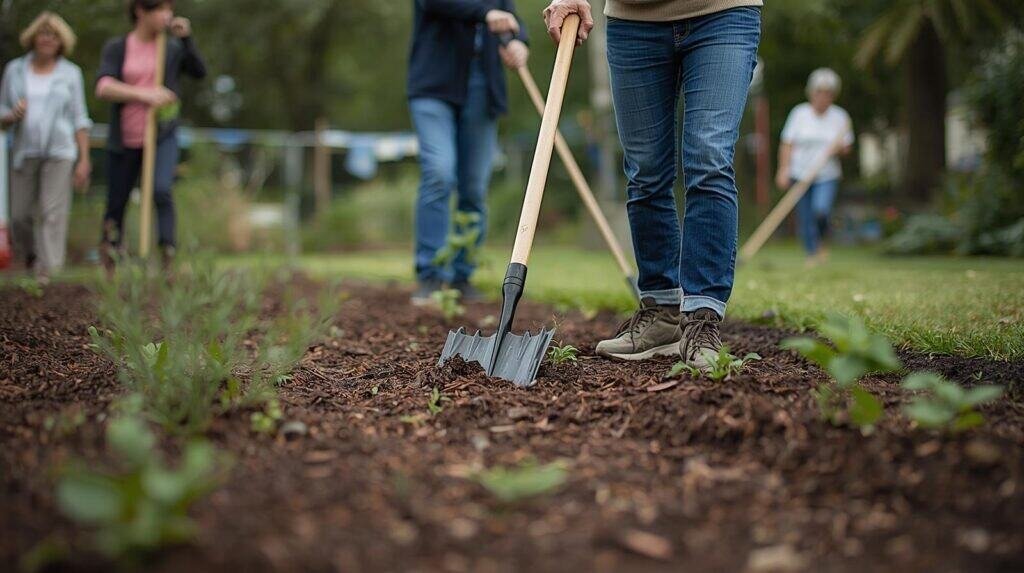
Mulch is one of the simplest low maintenance gardening tricks.
A good thick layer of mulch: • Reduces weeds • Keeps moisture in the soil • Reduces watering • Protects roots from temperature swings
That means fewer trips outside with watering cans and less time pulling weeds.
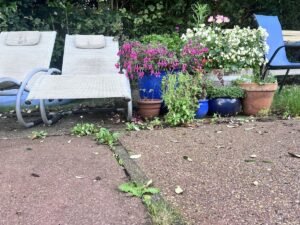
For seniors especially, mulch reduces one of the most painful gardening jobs — constant weeding.
According to the Royal Horticultural Society, mulching helps conserve moisture and suppress weeds.
3. Container Gardening = Less Strain
Containers are a wonderful solution for low maintenance gardening for seniors.
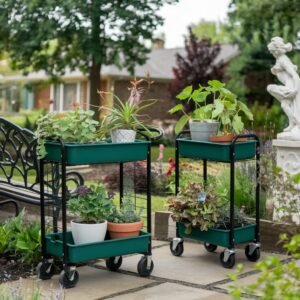
You can: • Raise pots to waist height • Use lightweight planters • Place them near seating areas • Group them close to your home
If bending is painful, bring the garden up to you.
Container gardening also: • Limits weeds • Uses less soil • Makes watering easier • Keeps everything within reach
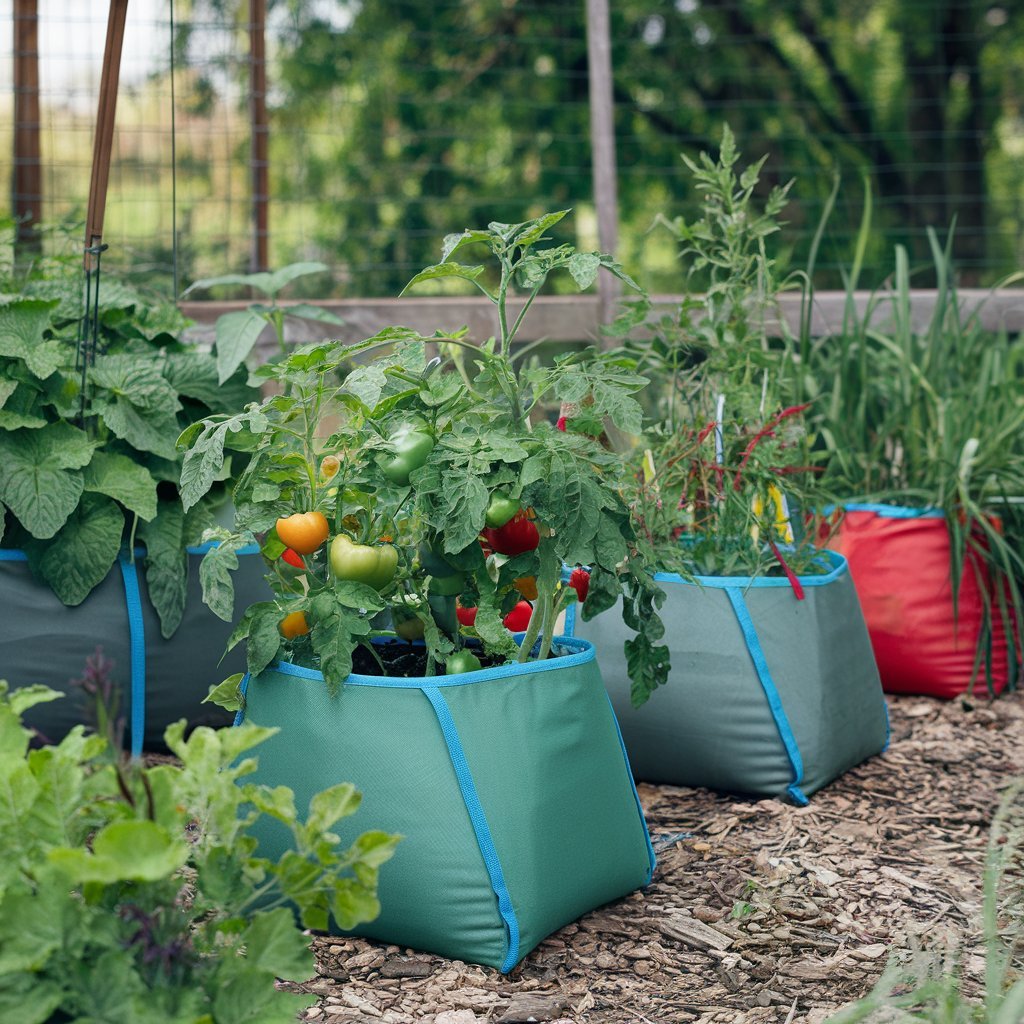
If mobility is limited or you use a wheelchair, containers are often far more manageable than ground beds.
4. Automatic Watering Changes Everything
Watering is exhausting — especially in warm climates.
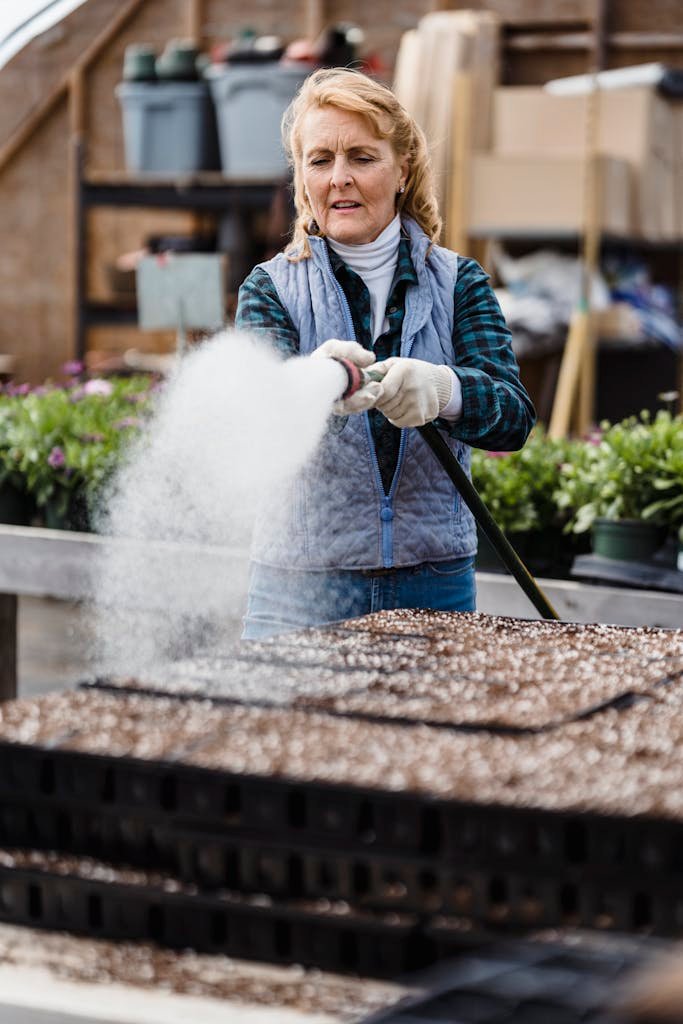
An automatic drip system or simple timer:
• Prevents overwatering
• Prevents underwatering
• Reduces physical effort
• Saves time
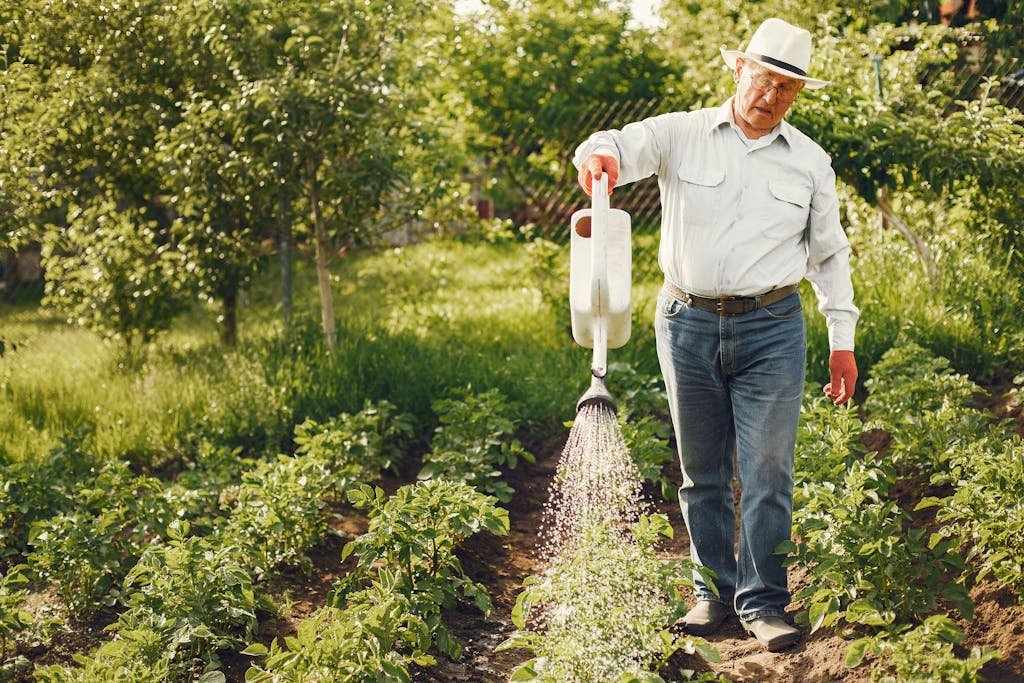
Even a basic hose timer can remove a daily physical task from your routine.
Less lifting. Less dragging hoses. Less fatigue.
5. Simplify Your Garden Layout
Low maintenance gardening isn’t just about plants — it’s about design.
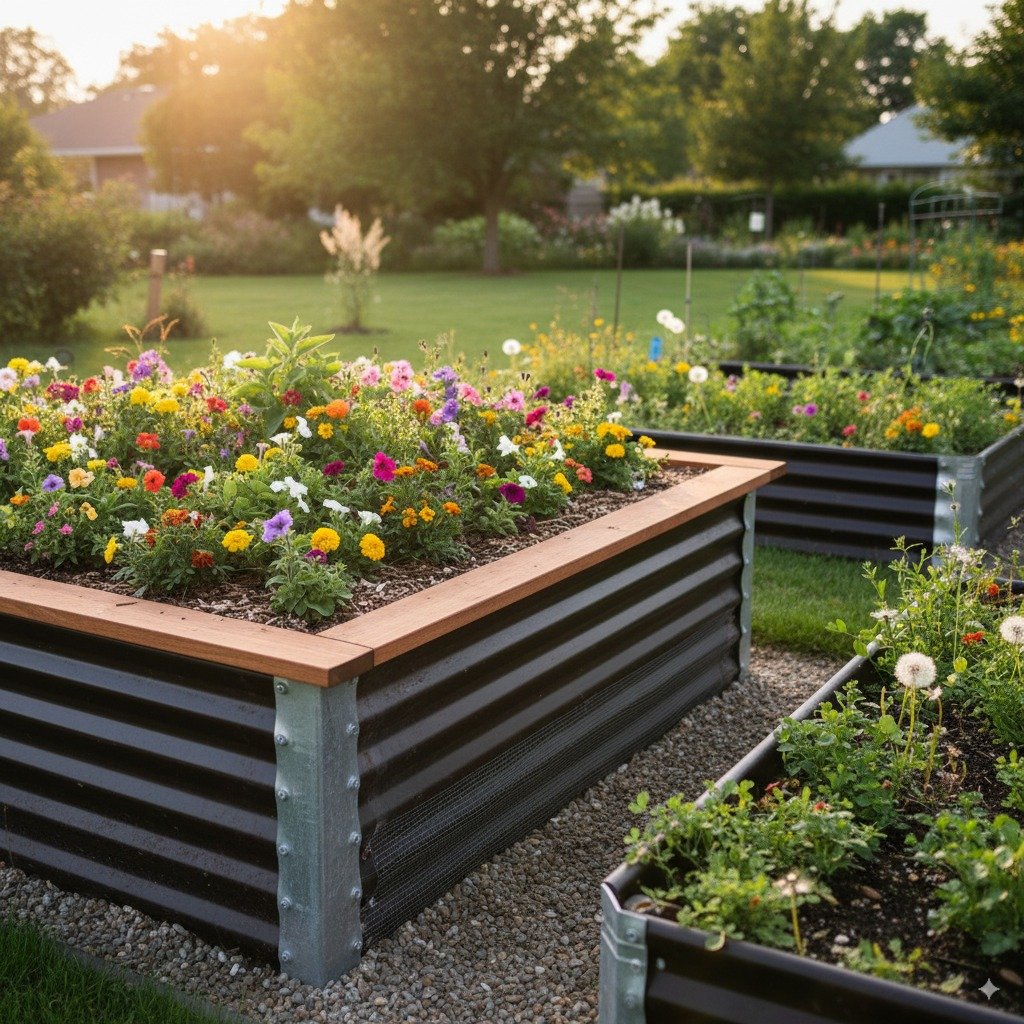
Ask yourself: • Are pathways wide and stable? • Is everything easy to access? • Are tools stored nearby? • Can I sit while I garden?
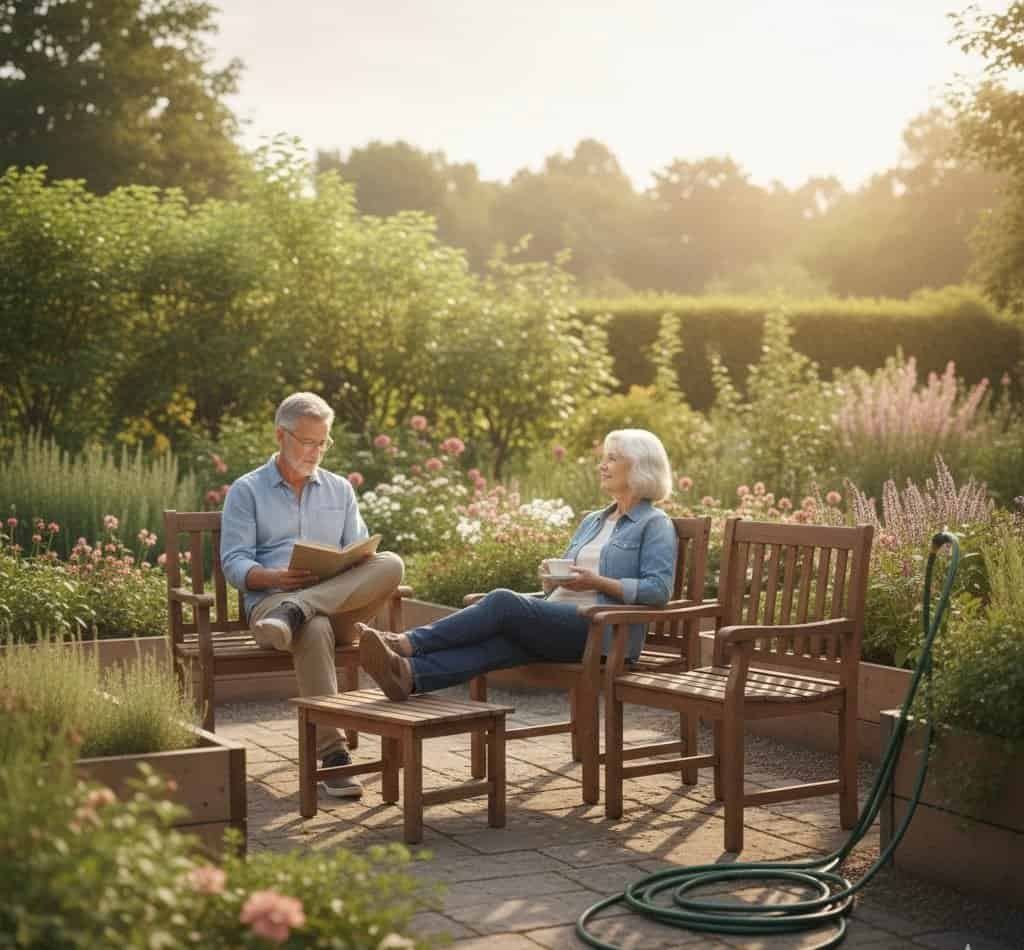
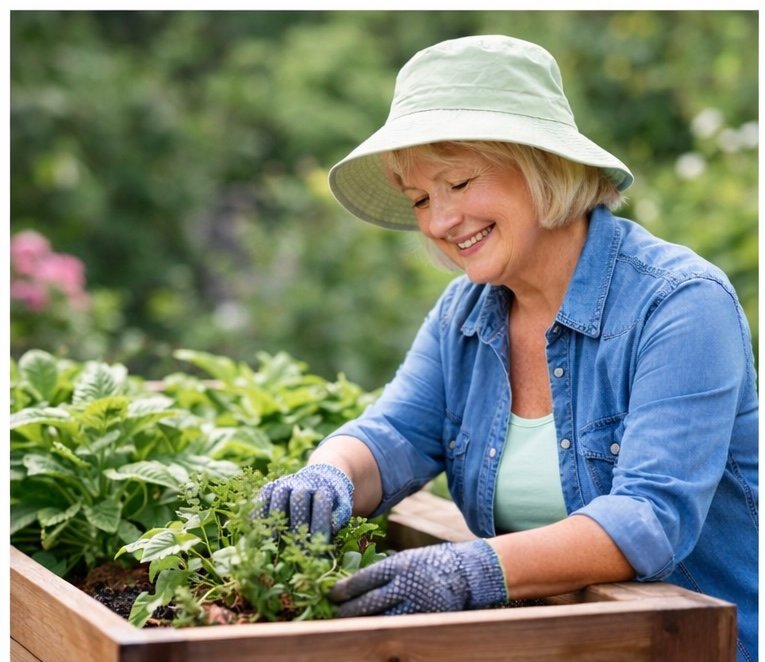
Add: • A comfortable garden bench • Raised beds if possible • Clear walkways • Storage close to planting areas
A simple, accessible layout reduces unnecessary movement.
6. Focus on What Brings Joy
This might be the most important one.
You don’t need: • A perfect lawn • Dozens of plant varieties • Complicated layouts
Choose: • A few favorite flowers • One small herb area • A manageable vegetable container • One feature bed you love
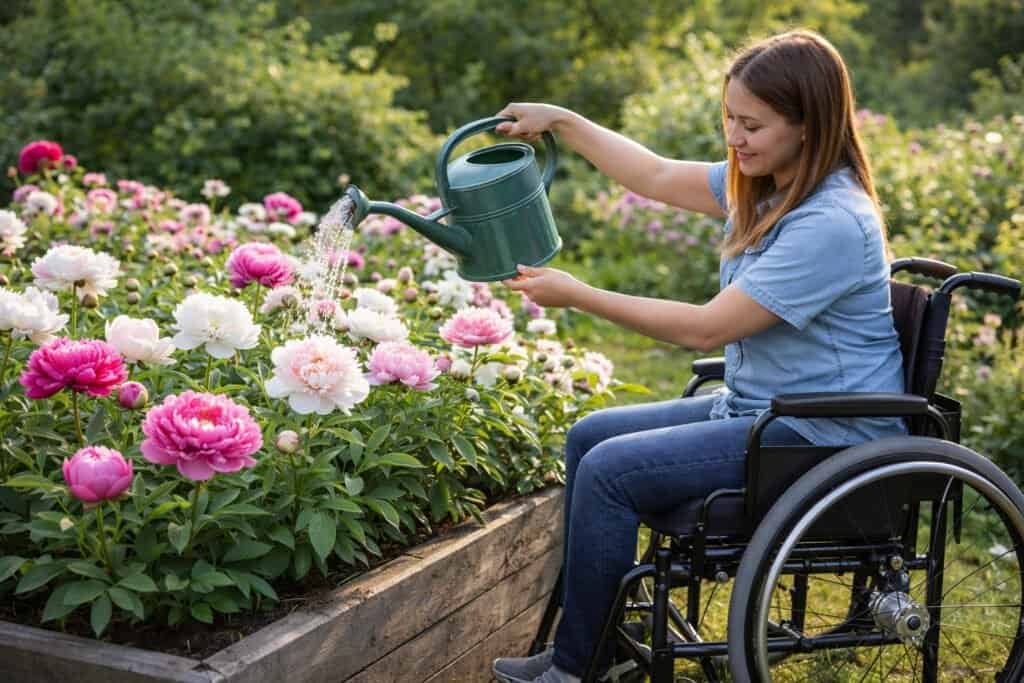
Low maintenance gardening for seniors is about sustainability — not impressing anyone.
My Honest Thoughts
As someone who understands what it feels like to live with physical limitations, I’ve learned something important:
You don’t need to do less gardening. You just need to do it differently.
When you remove the exhausting tasks, what’s left is the calm, healing part of gardening.
And that’s the part that matters.
Final Thoughts
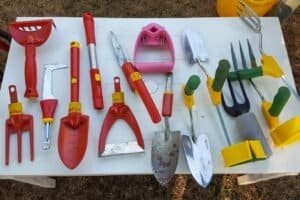
Low maintenance gardening for seniors is about: • Working smarter • Reducing strain • Choosing supportive tools • Designing for comfort
You deserve a garden that gives you energy — not takes it away.