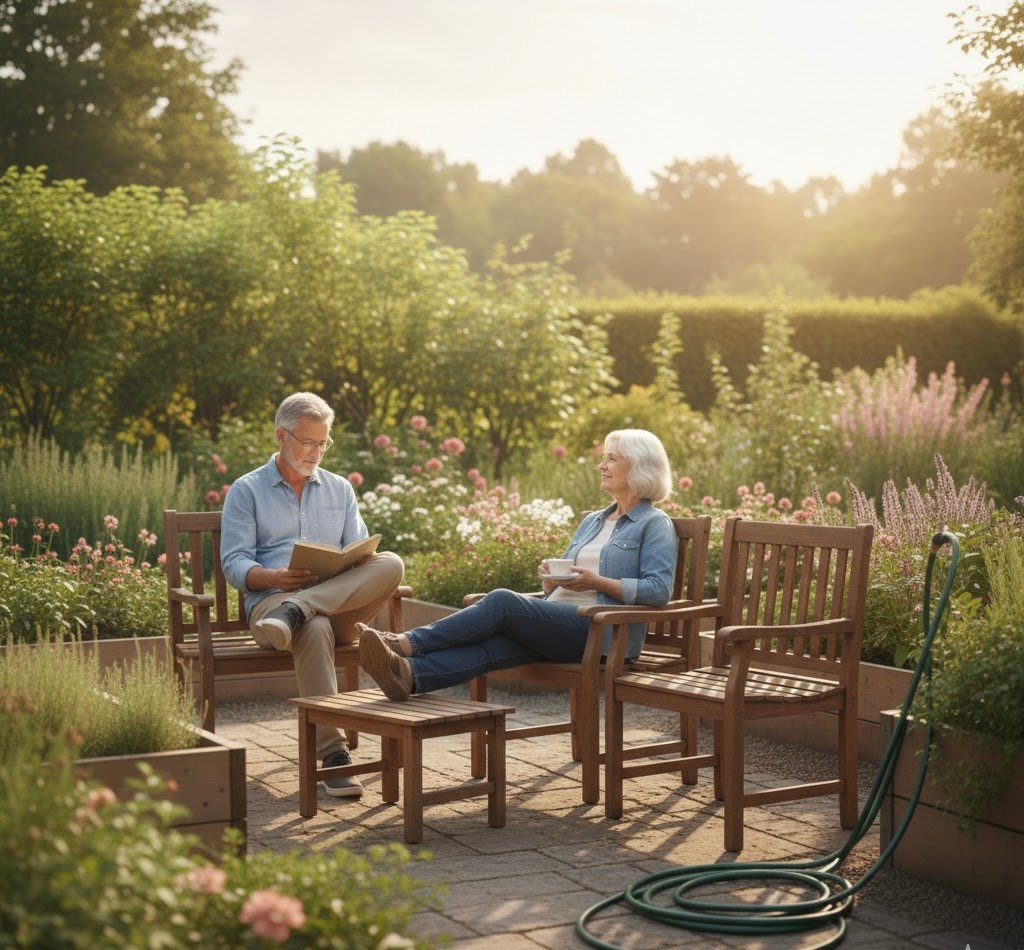
Gardening With Arthritis: A Beginner’s Guide
Gardening with arthritis doesn’t mean you have to give up the garden you love. With a few thoughtful changes to the way you garden — and the tools, planting methods and garden layout you use — you can reduce strain on painful joints and make gardening more comfortable and manageable.
Arthritis can make familiar gardening tasks such as digging, weeding, pruning, lifting, kneeling and gripping surprisingly difficult. The good news is that you don’t have to stop gardening altogether. You can adapt the way you work so that your garden works better for your body.
In this beginner’s guide, I’ll show you practical ways to garden with less strain, including how to protect your joints, choose easier tools, modify demanding gardening tasks, use raised beds and containers, reduce bending and lifting, and plan your garden for easier maintenance.
The goal isn’t to garden through pain. It’s to find easier ways to keep gardening

How Arthritis Can Affect Gardening
Gardening looks gentle from the outside. But it’s full of small, repetitive movements that are hard on joints.
Things like: • Repeated squeezing of pruners • Twisting wrists while weeding • Gripping tools tightly • Kneeling or squatting for long periods • Lifting heavy bags of compost • Dragging hoses across the garden
It’s not always one big movement that causes a flare. It’s the repetition.
For me, it was always the “just five more minutes” that did the damage.
The lesson I learned was that gardening with arthritis isn’t about pushing through discomfort until the job is finished. It’s about recognising when your body is telling you to stop, changing the way you approach a task, and giving yourself permission to come back to it later.
7 Practical Ways to Garden With Arthritis
These changes made the biggest difference for me.
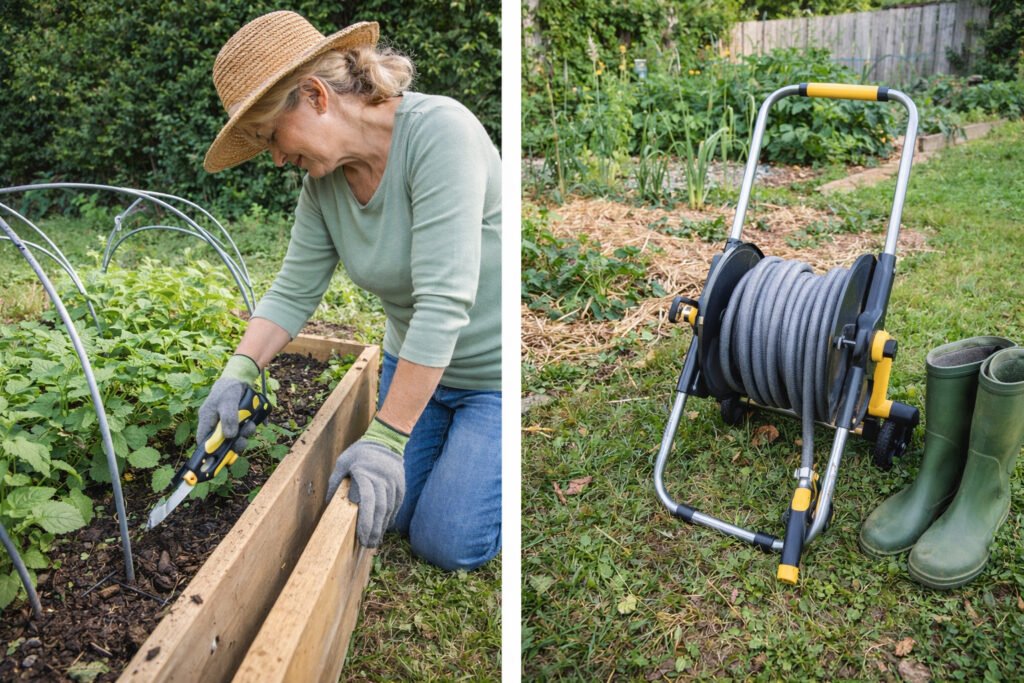
1️⃣ Choose Ergonomic Tools That Reduce Strain
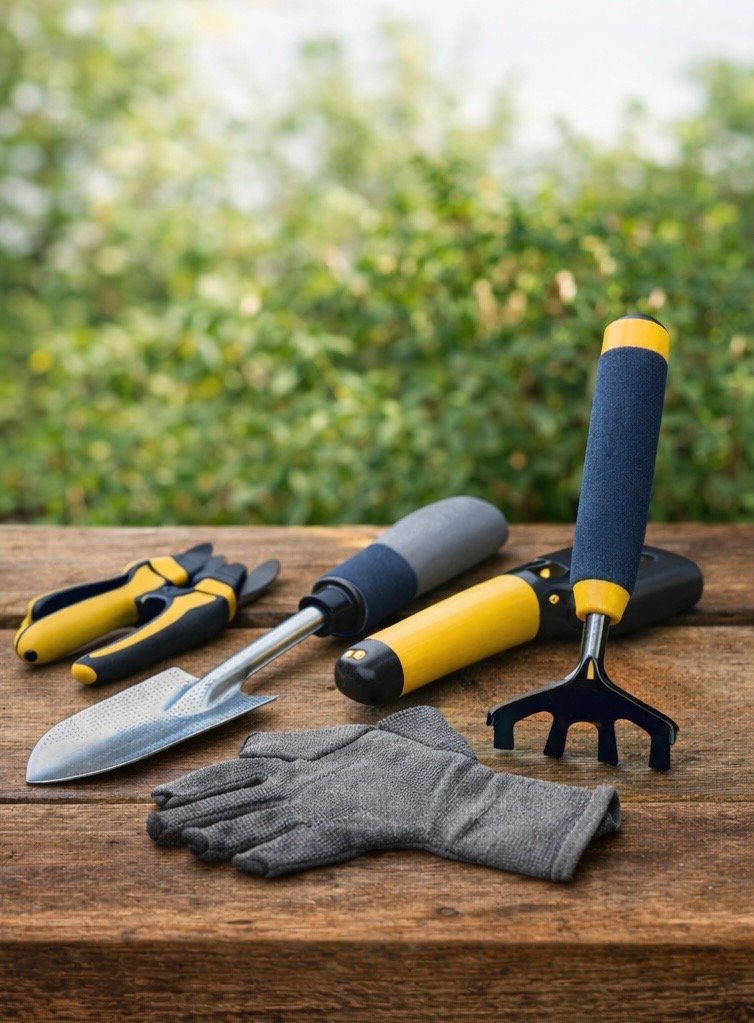
Thin, hard-handled tools can force your hands and fingers into uncomfortable positions, especially when you’re gripping, squeezing or using a tool repeatedly. Ergonomic tools are designed to make these movements easier by providing more comfortable grips, better leverage and less strain on your hands and wrists.
Look for tools with comfortable, easy-grip handles that fit your hand well. Lightweight tools can also make a difference when you’re working for longer periods. You don’t need to replace every tool in your shed at once — start with the tools you use most often or find most difficult to handle.
The goal is simple: your tools should make gardening easier, not make your joints work harder.
2️⃣ Use Long-Handled Tools to Reduce Bending and Reaching
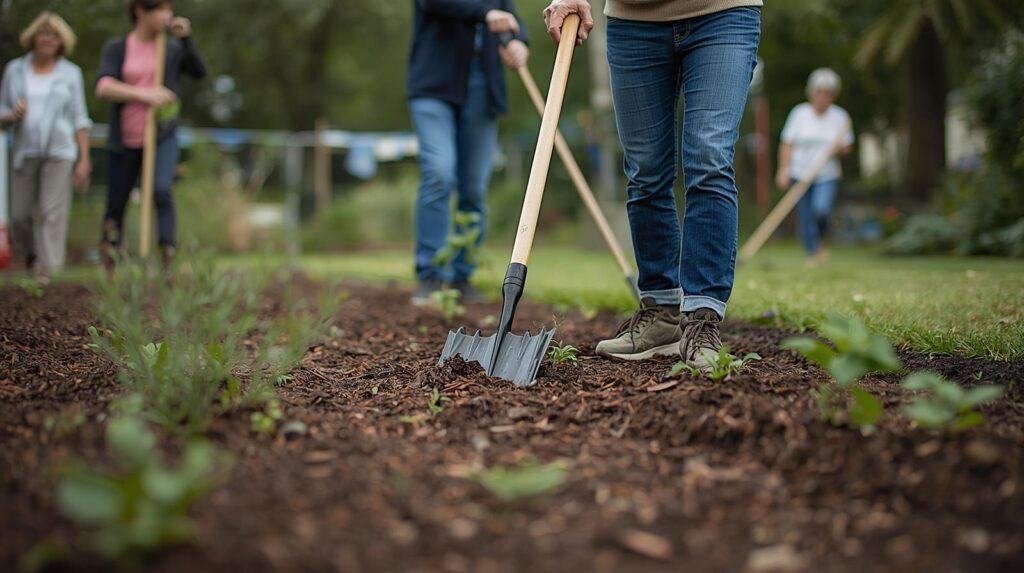
Bending puts pressure on your knees, hips and lower back, particularly when you’re repeating the same movement again and again. Long-handled tools can help you reach into beds and borders while staying in a more comfortable position.
They’re especially useful for jobs such as weeding, cultivating and reaching into areas that would otherwise require you to bend or kneel. Choose a tool that is light enough to handle comfortably and long enough for you to work without excessive reaching.
You don’t have to eliminate bending completely. The aim is to reduce unnecessary bending and give your joints a break wherever you can.
3️⃣ Take Regular Breaks and Pace Yourself
This one changed everything for me. I used to think I could just finish one more little job, but those extra minutes often caught up with me later.
Instead, I now break gardening into shorter sessions. I stop, stretch gently, have something to drink, walk around and give my body a chance to recover before deciding whether I want to continue.
You don’t have to finish everything in one day. Shorter gardening sessions can help you manage your energy and avoid turning a productive day in the garden into a painful one.
Arthritis has taught me that stopping isn’t giving up. Sometimes stopping is what allows me to come back and garden again tomorrow
4️⃣ Raise Your Working Height to Reduce Bending
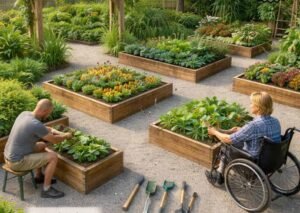
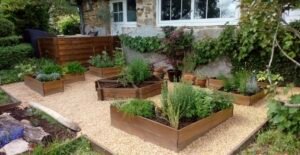
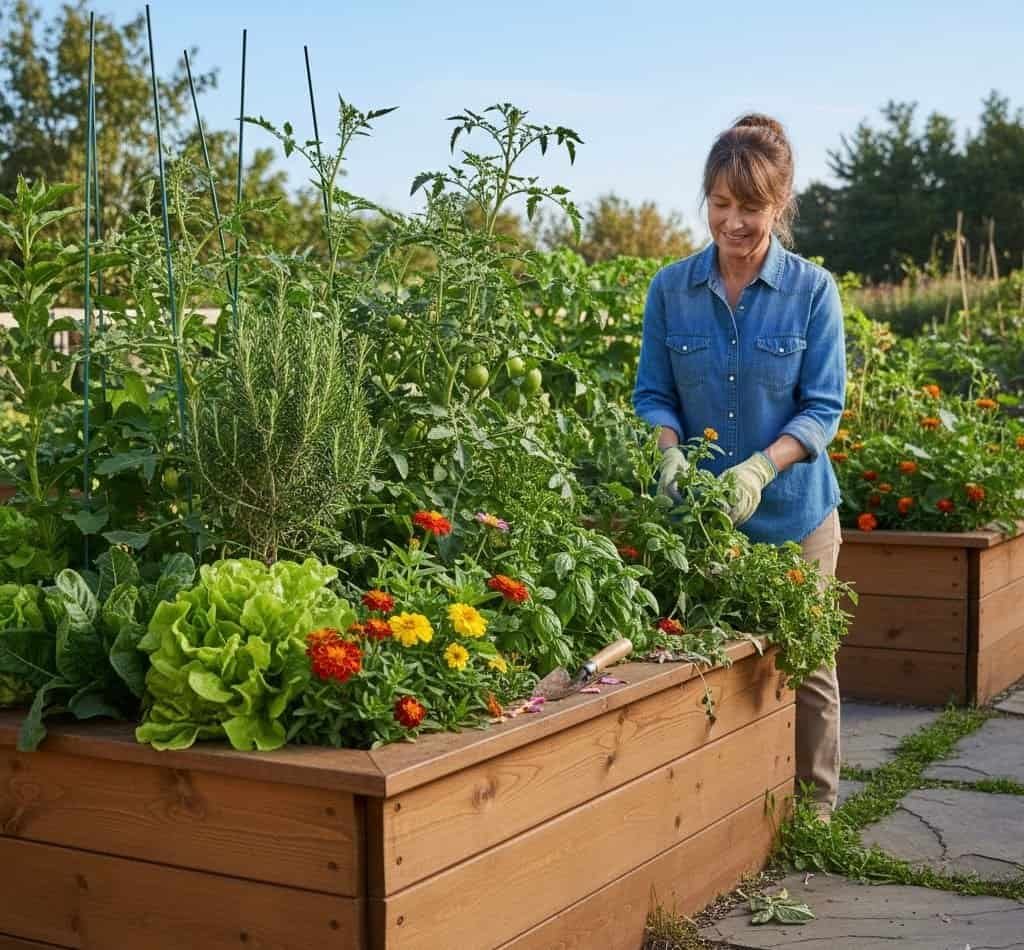
If you struggle with mobility or find bending uncomfortable, raising your working height can make gardening much easier. Raised beds, containers, hanging baskets and sturdy potting benches can bring plants closer to you and reduce the amount of bending and kneeling required.
You don’t have to redesign your whole garden overnight. Start small — even a few containers at waist height can make a difference. Choose a height that feels comfortable for you and make sure containers and supports are stable and safe to work around.
The aim is to bring the garden closer to you, rather than constantly bending down to reach it.
5️⃣ Protect Your Hands While Gardening
Your hands do a lot of work in the garden, from gripping tools to pruning, planting and pulling weeds. If your hands are painful or easily fatigued, choosing tools with comfortable grips and avoiding prolonged, forceful gripping can make gardening easier.
Some people find supportive or compression gloves comfortable when gardening, but they’re not right for everyone. If you use them, choose something that feels comfortable and doesn’t restrict your movement or circulation.
Most importantly, pay attention to what your hands are telling you. If a task is causing significant pain or your symptoms are worsening, stop and give yourself time to recover. You don’t have to garden through a flare. Rest isn’t weakness — it’s strategy.
6️⃣ Use Mulch to Reduce Weeding and Watering
Weeding can be one of the most repetitive and demanding gardening tasks, especially when it involves repeated bending, gripping and pulling. Reducing the amount of weeding you need to do can make the garden easier to manage.
A layer of mulch can help suppress weeds and also reduce how often you need to water, depending on the type of mulch and your garden conditions. It can be a simple way to reduce some of the repetitive work involved in maintaining your garden.
For me, making the garden do more of the work has been far easier than constantly trying to keep up with it. Less weeding means less repetitive work — and that’s a win.
That keeps the personal voice while avoiding a promise that mulch will prevent arthritis flare-ups.
7️⃣ Choose Low-Maintenance Plants to Reduce Work
The more you simplify your plant choices, the less physical effort your garden requires. Choosing plants that suit your conditions and don’t need constant attention can make the garden much easier to maintain.
Think about what actually thrives in your garden rather than choosing plants that need constant pruning, watering or fussing. Grouping plants with similar needs can also make watering and general care simpler.
You don’t need a garden full of high-maintenance plants to have a beautiful garden. Low-maintenance gardening isn’t lazy — it’s intelligent. It’s about creating a garden that works with your body and your available energy, rather than constantly fighting against them.
Others quietly get on with growing.
Gardening Tasks I Now Avoid
There are some tasks I’ve completely stopped doing because they simply aren’t worth the pain. But I’ve also learned that some jobs don’t have to disappear completely — they just need to be changed.
For example, I might use a different tool, work from a more comfortable height, break a job into smaller sessions, or ask for help with the parts that put the most strain on my joints. The goal isn’t to prove that I can still do everything exactly as I did before. It’s to find a way of gardening that works for me now.
Letting go of certain jobs doesn’t mean giving up gardening. It means protecting your future ability to enjoy it.
Can Gardening Actually Help Arthritis?
Yes — but only when done gently.
Light movement improves circulation. Sunlight boosts mood. Being outdoors reduces stress.
Gentle activity can help stiffness.
But overdoing it causes inflammation.
There’s a fine balance. The goal isn’t to prove anything. It’s to stay consistent without triggering pain.
You Don’t Have to Give Up Gardening
Arthritis forces you to rethink how you garden — but it doesn’t have to take gardening away from you.
The biggest shift for me was this:
I stopped asking, “How can I do this the way I used to?”
And started asking, “How can I do this in a way my body allows?”
That small mindset change made gardening feel possible again.
And that’s what matters.